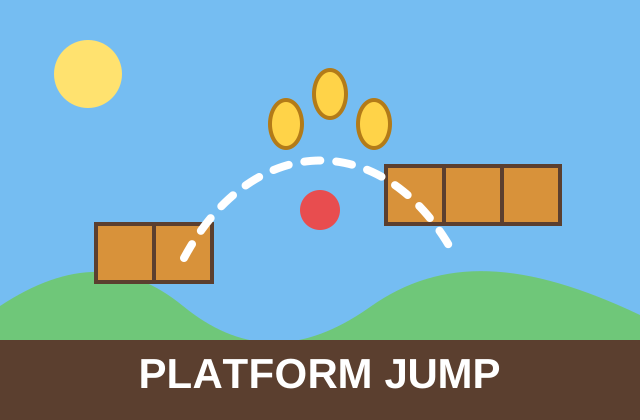
Controls
Use the D-pad to move, A to jump, and B to run or throw fireballs.
Tactics
- Running jumps cross wider gaps.
- Watch bricks and pipes for hidden rewards.
- Settle into a stage rhythm before sprinting.
Beginner Route
For a first Super Mario Bros. practice pass, split the route into three parts: stabilize the opening minutes, track resources in the middle, then identify the exact late points that cause failure. Avoid trying to document everything in one run. Verify one segment at a time and separate reliable sections from places that still need practice.
Mid-Game Practice
The middle stretch usually becomes difficult because pressure stacks up: less movement space, denser enemy patterns, tighter resources, or heavier decision making. Classify each failure as input error, route choice, low resources, missed information, or score greed so later guide updates can point to a practical fix.
Resources, Score, and Rhythm
If Super Mario Bros. uses lives, energy, ammo, time, money, experience, score, or items, keep a separate resource table. Record where resources come from, when they are spent, which rewards justify risk, and which rewards disrupt the route. In FC/NES games, steady rhythm is often more valuable than one flashy move.
Common Mistakes
Common beginner mistakes include chasing speed too early, moving into danger for rewards, spending key resources too soon, repeating the same failed route, ignoring version differences, or recording conclusions without the reason behind them. Listing these mistakes helps players diagnose why they are stuck.
Practice Checklist
Use a checklist: confirm controls, stabilize the opening, record the first hard point, list supplies or item locations, mark the screen where damage, failure, or confusion happens most often, then add bosses, passwords, secrets, or score routes. Each completed item can become a concrete guide note.
FAQ
What type of FC/NES game is Super Mario Bros.?
Super Mario Bros. can be treated as a Platformer / FC/NES Game Index entry. Start by confirming the controls, screen rhythm, and win conditions, then separate enemy, hazard, item, or menu rules into clear notes.
What should beginners practice first in Super Mario Bros.?
Practice the opening and basic inputs first, aiming for a stable early route. Running jumps cross wider gaps. After that, add route notes, resource choices, and score strategies.
What should I check when stuck in Super Mario Bros.?
Decide whether the failure came from movement, resources, attack timing, route choice, or missed information. Record the failed screen and one action to change next time instead of replaying the whole run blindly.
Can version details affect Super Mario Bros. strategy notes?
Yes. Current reference details include FC/NES version details pending. Different releases can vary in text, difficulty, stage order, passwords, or small behavior details, so keep version notes attached to strategy work.
Can I play online or download a ROM for Super Mario Bros.?
No. This site only organizes Super Mario Bros. reference notes, control guidance, play priorities, and strategy clues. It does not provide ROM files, download links, emulator bundles, or unauthorized online play.
Where should I start practicing Super Mario Bros.?
Start with the opening, basic inputs, and the first recurring failure points. Make this stable first: Running jumps cross wider gaps.
Why do version notes matter for Super Mario Bros.?
Super Mario Bros. currently has reference details including FC/NES version details pending. Releases can differ in language, difficulty, passwords, stage order, or small behavior details.
How should I review a failed Super Mario Bros. run?
Decide whether the failure came from movement, timing, low resources, route choice, or misunderstood rules. Change one issue at a time.
What style of game is Super Mario Bros.?
Super Mario Bros. can be read as a Platformer entry. Focus on input rhythm, enemy behavior, item use, stage flow, and common mistakes.
Can I clear Super Mario Bros. by memorizing a route?
Route memory helps, but it does not replace control basics. Learn why the route works, when to stop, when to attack, and when to save resources.